Author Archives: Laine Cunningham

Unknown's avatar

About Laine Cunningham

Laine Cunningham is an award-winning author, ghostwriter, and publishing consultant who has been quoted on CNN Money, MSNBC.com, FoxNews.com, and other national and international media. Her work has won multiple national awards, including the Hackney Literary Award and the James Jones Literary Society fellowship. She has received dozens of fellowships and residency slots from programs like the Jerome Foundation, the Vermont Studio Center, the New York Mills Cultural Center, Wildacres Center for the Humanities, Arte Studio Ginestrelle in Assisi, Italy, the TAKT Kunstprojektraum in Berlin, Germany, Fusion Art in Turin, Italy and The Hambidge Center. She is also the author of the travel memoir "Woman Alone: A Six-Month Journey Through the Australian Outback" and a series of Zen and Wisdom books combining unique inspirational text with beautiful photos.

Guest Post by Author Herta Feely

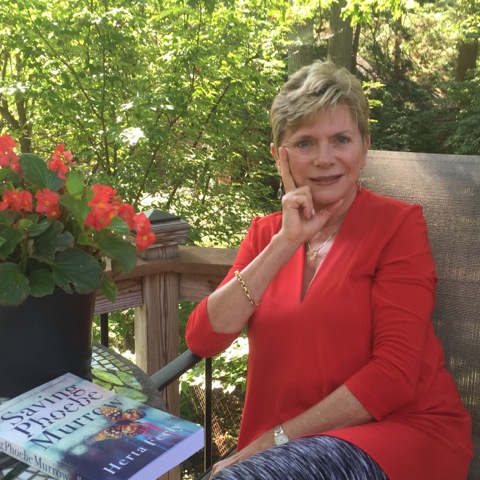
Today we hear directly from Herta Feely, author of Saving Phoebe Murrow. 

img_3289

It’s September. Crickets and cicadas screech in full chorus as I sit on a small third-story balcony overlooking a forest of oak trees, trying to imagine what readers might like to know about the writing of Saving Phoebe Murrow.

1) Are you wondering how I chose Phoebe’s name or Isabel’s?

2) Because Phoebe was bullied, do you wonder if, perhaps, I was ever bullied, or if I was a bully?

3) Do you want to know why the story is set in DC in 2008?

4) Do you ask: What are you working on next?

So, question one. The characters’ names. I’ve always liked the name Phoebe. It contains a kind of vulnerability and softness that I wanted for the eponymous 13-year-old character. As for Isabel, her character actually began with the name Susan in a short story, which then became part of this novel. In that story, which you’ll recognize in Saving Phoebe Murrow, a woman is getting a manicure and while there experiences anxieties about her teen daughter, from whom she feels estranged yet is dying to understand.  After changing Susan to Isabel, I also changed the last name from Winslow to Winthrop, which helps reflect Isabel’s rigid upbringing (as in the Puritanical Winthrops of Massachusetts), hence her rigid father, John Winthrop.

#2: Yes, in fact, I was bullied as a young girl when fresh “off the boat” from Germany and new to the U.S. It was quite painful and stayed with me for many years. I only remembered this after writing the novel when someone asked me about bullying. I imagine that experience allowed me to tap into emotional truths for 13-year-old Phoebe in the novel. (I don’t recall being a bully. Bossy, yes. Bully, no!)

#3: The story is set in DC , where I’ve lived since 1982. Though this novel reflects certain peculiarities of DC culture, perhaps even exaggerates them for dramatic effect, the essential aspects of the story could take place anywhere. I chose 2008 because teens still heavily used Facebook then and it was an interesting election year, which allowed me to bring certain aspects of the city to the fore.

#4: I’m working on All Fall Down, a novel about Charlotte Cooper, a woman about to reach the pinnacle of her career, until everything falls out from under her. It’s also a love story between a London-raised Nigerian sculptor and Charlotte, the human rights activist.


To hear more from Feely, check out her website. Be sure to come back tomorrow for the giveaway!

For another novel that features a strong female protagonist in a unique setting, try Beloved: A Senual Noir Thriller

Free Reading: Excerpt from Saving Phoebe Murrow

As promised, here is a free excerpt from Saving Phoebe Murrow by Herta Feely. This is from pages 56 through 58 when Phoebe’s mother is getting a manicure.

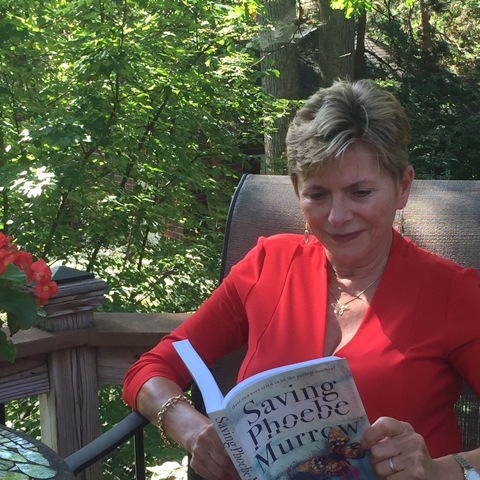
img_3331


Isabel’s thoughts traveled between Phoebe, the TV, and Thuy, whose soft, quiet features belied the strength in her hands. She rubbed Isabel’s forearms, then her palms and each finger. Isabel closed her eyes and tried to relax. She needed to spend more time getting to know Phoebe’s friends and their parents, even if one of them was Sandy. She’d start by being friendlier at the party that evening, and released a long exhalation of air.

“You have long week?” Thuy asked in a low voice. Isabel nodded. Much too long, she thought, when suddenly a local news anchor’s head appeared on the TV screen. He wore an earnest, worried expression.

The words “Breaking News” popped up behind him. For some reason subtitles now failed to crawl across the screen. Isabel’s brow wrinkled. What was he saying? Anything could have happened. Anything from those exploding sewer lids in Georgetown, to a drive-by shooting (she thought of the DC sniper of a few years ago), to another act of Al Qaeda terrorism. Why on earth didn’t they turn up the volume?

The image on the screen flipped to a low-income neighborhood. At the bottom it said, “Adams Morgan.” She caught sight of several police cars outside a crumbling apartment building. What the hell’s going on, she wondered. But the announcer’s face returned, mouthing the words, “…breaking news story. Back in a minute.”

The news made her restless. As Thuy deftly lacquered the nails of her left hand, Isabel wished the manicure were finished. She wanted to be home in her clean house (thank you, Milly) and have a glass of Chardonnay. She again tried to relax, inhaled the familiar scent of polish, but another thought niggled its way into her brain. What if Phoebe’d gone to Adams Morgan after all?

Until recently, Isabel had taken for granted that Phoebe was reliable, alongside being wonderful, smart, and kind. And very pretty, even if she had inherited Ron’s short, slightly stubby fingers. Nor had she ever worried about what other adults thought of her, not even after she learned about Phoebe’s cutting.

She considered this as Thuy brushed sunrise onto her long nails, which accentuated her shapely slender fingers, fingers someone had once referred to as perfect.

Actually, she’d always thought that Phoebe was perfect, or nearly so, until a little over a year ago, when she’d begun accumulating used clothing. Disgusting smelly men’s pants and shirts, women’s dresses, and even old petticoats and tattered jeans. God only knew where she found them. Surely she hadn’t been going to shops in Adams Morgan all along?

One day – when was it? – Phoebe had told her she wanted to design clothes. A skill she’d learned from Ron’s mother. With her chubby, nail-bitten fingers, Phoebe began tearing these hideous clothes apart, then sewed the dark swatches of fabric into skirts and assembling them into misshapen jackets.

At first, Isabel had objected. She wanted to steer Phoebe toward a sensible profession. But all at once, determined and headstrong, Phoebe had insisted fashion was her future. Isabel believed it to be a cutthroat, low-paying industry, and hoped it would be a phase Phoebe was bound to outgrow.

On the TV, the commercial concluded and the same neighborhood featured earlier reappeared. Isabel leaned toward the screen. A crowd of people had gathered behind Cynthia Chan, the reporter at the scene, microphone in hand. Police cars stood in the background. The reporter was saying something, her mouth moving exaggeratedly. Isabel could only guess at the content. Her eyes drifted to the cluster of people surrounding the woman, mostly Latinos, though whites were among them, and a few African Americans.

A girl standing further back near a policeman caught Isabel’s eye. A fair-haired white girl, wearing a jean jacket that looked like one of Phoebe’s creations!

Isabel’s distance from the TV made it impossible to discern the girl’s features. She tugged her hand away from Thuy and jumped out of her chair, awkwardly threading her way toward the TV in her paper flip-flops. She called out for the volume to be turned up. As she drew near, the camera angle shifted and the policeman and the girl disappeared.

Isabel gazed emptily at the screen. The anchorman’s mouth shaped the words, “Thank you, Cynthia.”

Isabel turned around to find people staring at her. She felt the need to say something, but the words caught in her throat. “I just thought the girl looked—” She stopped; her eyes scanned the clientele. They looked like jurors, hanging on her every syllable, their own thoughts in limbo. Normally she took this in stride, but now their stares unnerved her. Finally, she met their gaze, and groping for a word, added, “Familiar. She looked familiar.”

Interested? Get the book on Amazon here. Check back tomorrow for a guest post, and don’t forget the giveaway on Saturday!

Or, for a gripping journey through a young man’s attempt to rescue his sister and his girlfriend from a Native American-style peyote cult, click on Reparation: A Novel of Love, Devotion and Danger

Book Review: Saving Phoebe Murrow by Herta Freely

Saving Phoebe Murrow by Herta Freely

Upper Hand Press LLC, September 2016

spm-high-res-coverA book can be read many ways. Some people want only entertainment while others enjoy exploring a social issue or delving into a particular message while reading. Nearly everyone is looking for some level of quality in the writing, at a minimum prose that keeps their attention either by moving briskly or by building the details of a fictional world that consumes readers with a unique time and place.

When reading a book for a review (and as a reader), I look at two distinct areas. First comes the storytelling skills: character development, scenic development, and pacing. Second is the context: the takeaway, whether it’s a message or simply an emotion, that readers hold after they finish the last page.

Because these two elements can end up on opposite sides of the ranking scale, occasionally the reviews I write are mixed. That is clearly the case with Saving Phoebe Murrow. 

Since storytelling is so important to most readers, I’ll address these elements first. And be warned that it’s going to sound harsh.

The first few chapters are promising and lead readers directly into the lives of the major players: the career-minded mother, and the gentle and intelligent daughter who is already dealing with psychological issues.

Eventually readers recognize the flaws of the other players, mainly a husband who has already strayed from his vows and the mother of Phoebe’s friend who is clearly not emotionally balanced. And even in the way this review talks about the characters presents one of the primary issues, the flat, two-dimensional antagonist.

The antagonist is the friend’s mother. She is preoccupied by sex primarily because she uses sex to manipulate others. Quite frankly, that’s about all you need to know about this character, and in too true a way, that’s all readers are shown about her. She is never developed beyond that.

Readers learn quite a number of backstory elements about her but they all funnel into why she is the way she is. But without any depth to the backstory, the information doesn’t give her character any broadness of emotions. Readers feel no empathy for her. And there’s really nothing worse than a villain who is only a villain and not a human being with different aspects.

Providing a two-dimensional antagonist means that the primary characters don’t have anything real to work against. And that means that their own development remains thin. Although mother and daughter interact in many scenes, their relationship doesn’t really have the emotional charge that it should. The moment when the mother confirms her fears that Phoebe has begun cutting herself again should be a tragic moment but doesn’t move readers much.

The problem isn’t that readers never see the characters in action but that the writing itself is more functional than prosaic. No novel “needs” to be written with flowery literary skill but it should be more than a map from point A to point Z. The narrative and the dialog both are middling, but since the emotions are anything but average, the style doesn’t meet the needs of the story or the context.

This explains the number of other reviews that talk about the sagging middle where attention wandered away from the story. None of the characters are developed to the point where they really grab readers, and that’s a real shame. The book’s context, the backdrop of our real world where cyberbullies torment their victims, needs to be addressed.

And that’s where Saving Phoebe Murrow turns the corner. The message embedded in this work is so important, and there are so few works out there that take a realistic approach in a fictional context, that this story is really very valuable.

Fortunately, that value is actually enhanced by the prose style. This work isn’t categorized as YA, yet it would be very appropriate for young adult readers. Parents can therefore be secure in offering this work to their teens and, after reading it themselves, parents can then engage in a thoughtful and important conversation about cyberbullying.

So, to the ranking. Storytelling elements fall at 2. The context and the way it’s handled comes in at 3.5 with an additional point due to the importance of the message for our modern world, so the final score is 4.5. Averaging those two yields an overall rank of 3.25.

Readers interested in applying parenting skills or learning coping skills for life’s most common issues that are based on traditional tribal wisdom should check out Seven Sisters: Spiritual Messages from Aboriginal Australia.

Check back here tomorrow for an excerpt from the book. On Friday, this blog will feature a guest post from the author, and on Saturday a copy of the book will be given away.

I received a copy of the book in order to write this review.

Being Very Brave – Author Post by Caimh McDonnell

A great story about an author who just wouldn’t give up.

cleopatralovesbooks's avatarCleopatra Loves Books

A Man With One of those Faces

‘You must be very brave.’

I’ve been a stand-up comedian now for about 15 years and I’ve long since lost track of how many times somebody has said that to me. It’s one of the four responses that comics get when people find out what you do for a living. It’s by no means the worst; for example, my heart sinks when a sentence starts with ‘I’ve got one for ye…’ – not least because invariably what follows is tremendously offensive to someone’s race/gender/disability/sexuality or occasionally, all of the above. You’re more often than not left with the choice of fake laughing along and dying a little inside or sticking to your morals and risking a slap in the chops.

That risk aside, there really isn’t much bravery involved. It’s just talking nonsense to people and, with the noticeably exception of one gig I did in the Philippines, those people…

View original post 2,112 more words

Book Review: The Things We Keep by Sally Hepworth

St. Martin’s Press, January 2016

This was a very thoughtful and engaging book. It also had a few surprises to offer, which I didn’t expect!

Anna is a youngish woman, mid-thirties, with early onset Altzheimer’s. Right from the beginning, her voice is witty and warm, yet doesn’t shrink from showing the difficulties involved with losing her memories and ability to live.

She places herself in a home where she can be cared for as the disease advances. There she meets a man about her age who has a different form of the same disease. They discover that they have more in common than the illness, and find love even as their minds lose the ability to remember that love.

Or are those memories lost? The title of the story hints at what isn’t lost even in the progress of such a debilitating ailment. And therein lies the plot.

Eve is a woman with her own troubles. When her husband causes the collapse of an investment account that impacts thousands of people, she leaves him…only to then be burdened with the guilt of his suicide.

Anna offers her something more. In getting to know Anna even after she is too far gone to form new friendships, Eve recognizes the tendrils of love that can be held onto no matter what. She becomes Anna and Luke’s only champion, and eventually enables them to stay together until the end.

Really a lovely work that delivers far more than I had expected. Well worth the time, and it is also a fast read. Pick this up on Friday evening and you won’t stop reading until you’ve turned the last page!

5 stars!

If you’re interested in reading another thoughtful novel about love in the face of horrible odds, try Reparation: A Novel of Love, Danger and Devotion.

I received an ARC from the publisher in order to write this review.

Book Review: He Will Be My Ruin by K.A. Tucker

Simon & Schuster/Atria, February 2016

From bestselling author Tucker comes another suspenseful story of the secrets people try, and fail, to keep.

When Maggie Sparks goes to her friend’s apartment to pack Celine Gonzalez’s things, she has been told that Celine killed herself. The overdose of drugs and alcohol isn’t like her, though, so Maggie doesn’t know what to think.

Soon enough, secrets start coming to life. A series of journals detail the ways that Celine was making money…as an escort who started out only as a high-paid companion but who soon moved on to providing sex. Then there’s a naked photo of a wealthy man who works at the same building where Celine held her day job. And a sex tape shows up later, one that can bring down someone whose career and life would crumble if the tape was leaked.

Blackmail, a vase worth millions, hidden cameras and tech spying are also discovered along the way. Maggie discovers that a friendly elderly neighbor can help in her quest for the truth while also discovering a possible new romance for herself with the building manager.

The plot is complex and the pacing is strong. The characters are well drawn, especially the elderly neighbor who might have been a paper cutout in the hands of a different author. The suspects in the crime are also well presented, and readers won’t know for sure who’s really involved in pushing Celine to the edge until the very end.

There was some loss of momentum at the end. Once the mystery falls away, the story is less interesting because the character support for the criminal isn’t as intensive at that point. The story still provides a strong reading experience, however.

5 stars!

If you are interested in a similar type of work, try Reparation: A Novel of Love, Danger and Devotion.

I received an ARC from the publisher so I could write this review.

Reading in Berlin, Germany

On August 10, Laine Cunningham will read from The Family Made of Dust (formerly called Message Stick) and Reparation at the Takt Kunstprojectraum in Berlin, GermanyBoth novels deal with individuals from tribal communities who were historically forced into migrations to new locations; their stories interweave with the stories of the peoples who are now being forced to flee their homelands.

For more information, click here.

TFMODustFrontCover (1)9780982239964_frontcover.jpg

Book Review: The Hummingbird’s Daughter by Luis Alberto Urrea

2005, Back Bay Books/Little, Brown

Oh, what a treat you’re in for if you haven’t yet picked up The Hummingbird’s Daughter. Written with a prose style so sharp and clean it flies along like the sprite in its title, this novel is a historical fiction piece based on a real woman.

Set during the time of the Mexican revolution, the story follows Teresita Urrea, a woman whose ability to heal others garners her the adoration reserved for saints. Starting with her early life, the narrative follows her family’s upheaval as they relocate the household to a place still attacked by Apache warriors.

There the father builds their new home, expands his business, and through it all, watches helplessly as his daughter–who only late was acknowledged as his child–draws around her the people who all seek some type of healing.

Just as Teresita was denied her father’s attention for the first years of her life, her teenage years are also not what might typically be found in the story of a saint. She suffers as much as any of the seekers who call her name. There are atrocities, some of which she witnesses being visited on others, and some of which are visited upon her. It is not always clear whether she will prevail.

Fortunately (for readers, anyway), there is a second book that continues this story. Urrea (the author) has also provided a glimpse into the strange and miraculous events that occurred while he researched this work; being able to read about these events arcs your thoughts back to the story and the compelling family met on these pages.

Pick this one up. You won’t regret it, I promise.

5 stars!

If you’d like to read a similar novel after this one, try The Family Made of Dust: A Novel of Loss and Rebirth in the Australian Outback (formerly called Message Stick).

Book Review: Between Two Fires by Mark Noce

Release date: August 2016 from Thomas Dunne Books

This power-packed historical novel is the first in a series…and it’s going to have readers beating on the publisher’s door for more.

Look, I’ll be the first to tell you that historical fiction can be a real slough. In the wrong author’s hands, novels set in any time period earlier than maybe 20 years ago can bog down in details…what folks wore, how they acted, the mores of their society, what their culture told them was right, how they rebelled…endless, really.

But in a strong author’s hands, historical fiction is a true delight. And that’s what Noce has delivered with Between Two Fires: a work that moves along briskly while providing everything they need to know to dive into the period. Never once will readers be left wondering, “What. What? Who? How did that happen?”

Part of the strength of this work comes from the depth Noce gives to the protagonist. Lady Branwen of Wales is the country’s last and final hope for unification…through marriage, of course. But the fellow she weds lives up to his nickname of Hammer King.

Meanwhile, Brandwen has been watching the rogue hedge knight Artagan, rumored to be as dark as his name, Blacksword. But he is more complex than that, and might be the only person she can rely on. Her mind is set against him but her heart has other plans.

As the lady becomes a queen and then flees from her realm, Saxons invade. The romance and intrigue take on a depth that comes entirely from the well-drawn characters painted atop the historic backdrop.

There are some elements about the descriptions that are repetitive. These are fairly minor but several did throw me out of the fictional world for just a few beats. Readers of this type of work can be trusted to follow along, and hopefully the rest of the books in this series will eliminate those types of blips. Generally, this was a strong showing. I can’t wait to read the rest of the series!

5 stars!

Book Review: The Sanctum by Pamela King Cable

Michael Brown. Miriam Carey. Trayvon Martin. Tanisha Anderson. We all know their names, and every time their names are spoken, we hear the ringing alarms that tell us that racism is as alive and well today as ever in American history. Now this same dark history is brought into the light in a Christian novel called The Sanctum by Pamela King Cable.

Thrown into the care of her alcoholic grandfather, Neeley McPherson is raised by his elderly farmhand named Gideon, a black man she grows to love. In the winter of 1959, she is only thirteen but has already experienced true horrors. When Gideon is accused of stealing a watch and using a whites-only restroom, she stands defiantly against everything wrong in the world and breaks him out of jail.

Catfish Cole, Ku Klux Klan Grand Dragon of the Carolinas, pursues them across the Blue Ridge Mountains. After ice sends Gideon’s truck down a steep slope, they hike through a blizzard and arrive at a wolf sanctuary where Neeley crosses the bridge between the real and the supernatural.

There she discovers her grandfather’s deception, confronts the Klan, finds her faith in God, and uncovers the shocking secrets of the family who befriends her. The act of providing sanctuary leads to another tragedy but second chances and the defeat of prejudice grant Neeley’s most passionate desire.

In prose that touches on the shadowy noir of Gothic Southern fiction, this tale of suffering carries readers through the darkness and into the light of hope…hope for the characters and hope for America. Blending the awareness of Harper Lee’s To Kill a Mockingbird with the social astuteness of Kathryn Stockett’s The Help and a faith in the transformational power of love found in Sue Monk Kidd’s The Secret Life of Bees, this timeless coming-of-age novel is a powerful commentary on what we once were…and what we can all become.

5 stars!

Pam’s other novels are also steeped in Bible-belt mystery and paranormal suspense. Televenge, the story of a woman who realizes her megachurch is actually a religious cult, has attracted attention from Fox News, CBS Atlanta, a major Hollywood film producer, and bloggers and media outlets worldwide.

She is also the author of Southern Fried Women, a collection of short stories that touch the heart.

Writing about her own fiction, she says:

“For me, it is within sanctuaries of brick and mortar; places of clapboard and canvas that characters hang ripe for picking. From the primitive church services of the mountain clans to the baptisms and sacraments in cathedrals and synagogues all over the world. From the hardworking men and women who testify in every run-down house of God in America to the charismatic high-dollar high-tech evangelicals televised in today’s megachurches, therein lie stories of unspeakable conflict, the forbidden, and often, the unexplained.”

Author Interview: Pamela King Cable

Today we’re joined by Pamela King Cable, author of the chilling Televenge and the heartwarming Southern Fried Women. Her latest, The Sanctum, is a moving coming-of-age story dealing with one of America’s most pressing issues: racism. The novel features King’s usual blend of supernatural elements, mysteries in society and secrets of the heart to create evocative, heart-piercing stories.

How would your advice for new writers differ from advice you would offer writers who have been in the game for a while?

I could get myself in trouble, answering this question. If somebody tells you they’re not writing to make money, they are lying to you. We all want paid for our work. If a painter gets paid for his masterpieces, if a landscaper pockets cash for the curb appeal he adds to his client’s homes, and if a caterer makes a living on the weddings and parties she slaves over, then a writer should get paid for her books that took years to complete and publish.

But if you think the money comes easy, think again. You’re not going to get rich. In fact, keep your job. Writing will not pay your bills. Not for a long time. There’s a balance, and unfortunately it’ll take blood, sweat, and tears to find it. The writing and publishing industry is in desperate need of a major overhaul. Know that up front.

Realize the length of time it takes from finishing the novel to publication is painfully long. Some hip, cool publisher needs to find a way to shorten that time period and pass it on to a few of the old goats in the business. Know that the industry has set itself up as a God to the writer. Twenty-three-year-old New York City editors should not be allowed to judge a writer’s work.

Another warning to the newbie—be aware of the old, worn-out process of retailers returning your unsold books. It’s still the most ridiculous part of this business. Total nonsense. If the Gap can’t return its unsold blue jeans to the Levi Company, why should Barnes & Noble be allowed to return its unsold books to the publisher? This is an antiquated process that needs to stop. Now.

Newbies in this business—get your heads out of the clouds and see the writing world for what it truly is. If after you’ve done that, and you still want to write and publish … then do it with your eyes wide open to one final realization. It takes no less than ten years of writing, rewriting, and learning your craft before you are actually ready to publish.

Now, with all that said … there is no greater sense of accomplishment than leaving a legacy of a hard-earned published book. Nothing greater than that …

From your perspective as an author, what do you feel is the biggest challenge to the publishing industry today? Is there a way to solve that challenge?

I will refer you to my answer in question one. All of the above are big challenges. But instead of fancy/schmancy writing conferences that charge an arm and a leg, and teach you the same worn-out topics they taught you last year and the year before, let’s stop the madness of empty promises. Promises of editor and literary agent contacts. Do you realize how slim your chances are that those editors and literary agents will even remember your name? We need a Writer’s Convention where round table discussions result in finding real solutions to the serious issues at hand.

The problem is that writing is a solitary business.  We all work alone. And we like it that way. But until we confront the current issues and make strides to change them, the publishing world will continue to be run by the big dogs … the Mahogany Row Executives who really don’t give a damn about our issues. Their bottom line is all that matters. In the case of traditional publishing, they got us over a barrel and they know it.

What has inspired you to become a writer?

I write about religion and spirituality with paranormal twists unearthed from my family’s history. I write about my passions, what moves me, what shoots out of me like a rocket. My key inspirational force is my spirituality.

I was born in the South, a coal miner’s granddaughter, but my father escaped the mines, went to college and moved his family to Ohio to work for the rubber companies in 1959. I spent every weekend as a little girl traveling back to the Appalachian Mountains. My memories of my childhood run as strong as a steel-belted radial tire and as deep as an Appalachian swimming hole. As a little girl, I was a transplanted hick in a Yankee schoolroom. I grew up in the North. So my influence comes naturally from both regions. But the dusty roads in the coal towns of the ‘sixties are where my career as a writer was born.

How do you come up with your characters, and how do you make them interesting?

For me, it is within sanctuaries of brick and mortar; places of clapboard and canvas that characters hang ripe for picking. From the primitive church services of the mountain clans to the baptisms and sacraments in cathedrals and synagogues all over the world. From the hardworking men and women who testify in every run-down house of God in America to the charismatic high-dollar high-tech evangelicals televised in today’s megachurches, therein lie stories of unspeakable conflict, the forbidden, and often, the unexplained.

Do you plan on writing any other genres?

Not at all. There’s a mountain of material to cover in Historical Fiction. It’s like a black hole, drawing me in with no end in sight. I have stories in my head that may never see the light of day. There’s so little time allotted to any of us. It would take two lifetimes to get these stories from my head onto the page.

What inspired your new novel, The Sanctum?

Late in 2008, and for the next two years, I labored over a new story to give myself a break from the heat and intensity of Televenge. Little did I know of the fierce obsession and passion that would overtake me in writing The Sanctum. Wanting to include the possibility of the paranormal and spirituality from different points of view, I focused on a young girl with fuzzy, red hair who called herself Neeley, and the story began.

This skinny, parentless thirteen-year-old who wore thick eyeglasses and hand-me-down dresses captivated me from page one. Placing my little redheaded girl on a tobacco farm in 1959, and in the caring hands of an elderly African-American male, a rugged individual who wasn’t afraid of his gentle side, I quickly fell in love with them. The novel slowly wrote itself, dragging my heart behind it.

Many of my stories are based on people I’ve known and places I’ve been. History also plays a great part in my work. As a writer it is my desire to transport a reader’s mind—but my ultimate joy is to pierce your heart. When I was a little girl someone in my family taught me respect for all people. He said we were related to the great Martin Luther King since after all, my maiden name is King. I soon realized it wasn’t true, but I never forgot what he said. Later, I discovered blatant prejudice had incubated for decades within my family. My southern grandparents believed wholeheartedly in segregation.

For over a decade I lived near Summerfield, North Carolina, located northwest of Greensboro. This area is historically saturated with horse and tobacco farms, which today still dot the landscape. By chance I discovered James W. Cole (1924-1967) was ordained into the ministry in Summerfield at the Wayside Baptist Church in 1958. He toured as a tent evangelist and broadcast a Sunday morning radio program, becoming an active member of the Knights of the Ku Klux Klan, and eventually the Grand Dragon of North and South Carolina. The man intrigued and appalled me, and since the first part of the book takes place in Summerfield during that time period, I wrote him into the story.

The International Civil Rights Center and Museum is located in the recently restored Woolworth’s building in downtown Greensboro, a Woolworth’s that also found its way into my story. As I further studied the Civil Rights Movement, I thought of it in terms of rights for all people. My great grandmother was a full-blooded Cherokee, according to our family’s historian. So I then researched the Trail of Tears.

And finally the wolf appeared. An animal that has fascinated me all my life, the wolf is about family and order. It is a subtle character, but a voice to be reckoned with. I studied wolves carefully, and found people who loved the animal enough to create wolf sanctuaries. I spent time on a sanctuary near the town of Bakersville in the Blue Ridge Mountains, a five-hour drive from my home. When I arrived a sign read, The Wolf Sanctum. From that moment I called my novel, The Sanctum.

 Have you written other books that have been published?

 Southern Fried Women, Satya House Publications, 2010. Beth Hoffman, New York Times Bestselling Author of Saving CeeCee Honeycutt and Looking For Me, said:

“With a clear Southern voice and a remarkable gift of storytelling, Pamela King Cable has crafted a masterful collection of short stories. In themes ranging from flea markets to coal mine strikes, Southern Fried Women speaks of the wounds, joys, and sacrifices experienced by women who held strong in the winds of adversity and emerged bruised but miraculously unbroken. Each story is as thought provoking as it is beautifully written.”

Televenge, Satya House Publications,  2012. A review in Publisher’s Weekly notes:

“Cable’s unflinching fictional exposé of the dark side of televangelism has a human victim in the person of Andie Oliver. … Cable, a former member of a megachurch, places Andie’s desperate struggle against the oppression of (Reverend) Artury’s church, its brutal inner circle, murderous practices, financial fraud, and (husband) Joe’s abuse. This powerful story, skillfully written and with well-drawn characters, reveals the classic entrapment of vulnerable people in the name of a vengeful god …”

Library Journal wrote:

Televenge is “ … an emotional rollercoaster that ends as intensely as it begins . . . those who commit to Cable’s tome will find themselves captivated and deeply devoted to Andie. Fans of Fannie Flagg and Janet Evanovich will be hooked on this saga of religion, romance, and crime.” Library Journal Editor’s Pick BookExpo America 2012

Do you have a website and a blog? If so where can we find it?

You can find my blog on my website: www.pamelakingcable.com

Facebook: https://www.facebook.com/southernfriedwomen/

Twitter: https://Twitter.com/pamelakingcable / @pamelakingcable

Goodreads: http://www.goodreads.com/author/show/2935883.Pamela_King_Cable

To purchase The Sanctum: http://www.amazon.com/Sanctum-Pamela-King-Cable/dp/1938499034/

The String Diaries by Stephen Lloyd Jones

The String Diaries by Stephen Lloyd Jones

Mulholland Books/Little, Brown

Told in alternating segments that switch between different times (3 timelines total: one current, one in the recent past, and one roughly a century ago) and places, the narrative finally settles primarily into the now.
Considering the vast geography (several European nations) and time covered, and considering the idea at the heart of the story, this work should have been more compelling than it was. But I found the characterization lacking. This likely is due to the vast territories and timelines the story covers, and so isn’t really a flaw. Books that deliver this type of story don’t have much space for character development. Considering those constraints, then, the author has done a fine job getting readers to care about the people in this book.
The supernatural elements…and the fact that the shapeshifter hunts a specific family throughout time and down through the generations…is a fantastic concept. Overall, this is quite an enjoyable work that can be your next beach read.

4 stars

If you enjoyed this review, please leave a tip!

Exquisite Corpse by Poppy Z. Brite

Exquisite Corpse by Poppy Z. Brite

Scribner Paperback/Simon & Schuster Inc. 1996

I finally picked up this book after remembering what a big splash the author made back in the mid-90s. I have to say that the splash was well deserved. If you know anything about the author’s books, you know that I mean that in the ways you’re probably thinking. But I also mean it in others.

The quality of the writing here is very strong. The characters are all generally drawn quite well, with the exception of

Andrew’s voice is compelling, and as he drives a majority of the events, having him take the lead in the first chapter is an excellent choice. And, despite the fact that he is a serial killer who revels in all the usual cruelty and unique bloodiness his obsession entails, he is a compelling character whenever his scenes queue up. A bad guy readers love to hate and love at the same time.

It is a particular testament to the author’s skill to note that the method by which Andrew escapes from prison is drawn quite believably in the novel…even skeptical readers will agree to suspend their disbelief.

Jay is a budding killer who has the discipline to avoid fouling the city where he lives with his own kills…until Tran, a particularly beautiful Vietnamese hustler throws his considerable charms at Jay’s feet.

Tran’s sections are very well drawn, and allow readers to walk in yet a third lifestyle and mindset that is very different than the first two offered up in this book.

Lucas is the one that is the least compelling. Perhaps this is because his illness keeps him quiet in terms of activity, or perhaps it’s because he has the most common, almost suburban, existence of all the characters. Still, his portrait, when added to the other three, rounds out this work and creates a richness that otherwise would be lacking.

The four are pulled ever more tightly together. The two killers begin to work together, and there is that bloody finale that had so many people squawking when the work came out. (The author was rejected by the publisher of all his previous books because of the gruesome climactic orgy.) Which certainly is shocking but really isn’t any more horrible or ugly to read than many of the sections the killer recalls and enacts in preceding scenes. Which leads you to wonder why this was rejected at all.

If you’re a gory fiction fan, this one is for you!

4 stars

If you enjoyed this review, please leave a tip!

The Day She Died by Catriona McPherson

The Day She Died by Catriona McPherson

Midnight Ink/Llewellyn Worldwide 2011

Jessie has a fear of feathers. A phobia, really, total full-on medical name for it and everything fear of feathers. That’s where it starts.

Oh, wait. No. The book starts with a woman locked in some sort of box or vault or something. Readers aren’t sure because the space is dark. And the narrative doesn’t return to the box or vault except for a very few times.

So, the book whiplashes between a heavy, terrorizing scene and one that’s smarmily funny. Watch out, because these same weaknesses will show up again. The lady in the box isn’t visited enough to justify having her be at the opening, yet if we didn’t know she was in there the narrative wouldn’t have nearly as much drive.

Or would it? The rest of the book, Jessie’s story and the narrative flow and the characters and how the characters develop, are all quite enjoyable. How did it turn out that the lady in the box had to show up? Was this a publisher pushing the author to do something that wasn’t in the original draft, and the author caved because a contract with changes to the novel is better than no contract? Or were these scenes part of the original concept but haven’t been handled well by the author?

Interesting things to think about if you like to think about those kinds of things. But don’t let that stop you from reading this book. It’s a better-than-average take on the somewhat funny, self-denigrating yet more than capable female protagonist who stumbles on a mystery that must be solved. In time for the lady in the box to live, preferably, but since readers don’t really need to know that to enjoy this story, we could just overlook that, yes?

4 stars

If you enjoyed this review, please leave a tip!

The Blue by Lucy Clarke

The Blue by Lucy Clarke

Touchstone

An interesting story that holds some unique challenges for the author. Lana has spent some months on a sailboat with a handful of others who are all running—either from something or to something in their lives. She too was hoping to find herself and a new life when she joined the raggedy band. But then someone died and she bailed.

Now, the boat she was on has sunk in a storm. The Blue, a yacht carrying a crew of five at the time it went down, is the object of a search and rescue mission. After struggling with her memories of those months on board, she goes to the Coast Guard to see if her best friend is among the survivors.

What follows are the interwoven stories of her time on board and the rescue attempt. What is revealed about the captain and first mate, the other crew, and the best friends tells a tale not so much of sordid or shocking secrets but one that is burdened with all too familiar human drama. The complexities of how we present ourselves to others, as well as the illusions we attempt to maintain even in the forced intimacy of situations like a shipboard life, provides a compelling read.

Although at times the narrative feels like it wanders slightly, the writing is strong and the human interrelationships will draw you in. Well worth the investment of time to engage with this story.

4 stars

If you enjoyed this review, please leave a tip!